Knolling with AI: 3 Prompt Ideas
Read this note in: Español·Русский
Image generators know the word “knolling”. But ask for “a knolling photo” and you’ll often get a messy flat lay: objects on a diagonal, overlapping, with random props. To get real knolling, you need to describe its rules.
What to put in the prompt
A good knolling prompt usually has these parts:
- Camera: “top-down”, “shot from directly above”, “orthographic view”.
- Geometry: “arranged at 90-degree angles”, “neat grid”, “aligned rows”.
- Spacing: “evenly spaced”, “no overlapping”, “every object fully visible”.
- Grouping: “grouped by type” or “sorted by size”, “sorted by color”.
- Background: one simple surface - “white paper”, “light wood”, “gray concrete”.
- Light: “soft even light”, “minimal shadows”.
The prompts below are written in English - most models understand it best. Change the objects, keep the structure.
1. A hobby kit
The classic: everything you need for one activity, laid out on one surface.
Knolling photography of a film photographer’s kit: a vintage 35mm camera, two lenses, film rolls, a light meter, lens cloth, a notebook and a pencil. Shot from directly above, all objects arranged at 90-degree angles in a neat grid, evenly spaced, no overlapping, grouped by type. Light gray paper background, soft even light, minimal shadows.
Try it with anything: a fishing box, a watercolor set, a hiking backpack, a coffee brewing kit.
2. A disassembled object
Take one object and lay out all its parts. The photographer Todd McLellan made a whole series of such pictures, Things Come Apart - old phones, clocks, and typewriters broken down to the last screw.
Knolling photography of a disassembled mechanical alarm clock: every gear, spring, screw and the case laid out separately. Top-down view, parts arranged in straight rows at right angles, sorted by size from large to small, equal spacing, nothing overlapping. White background, clean studio light.
Good objects for this: a keyboard, a bicycle bell, a fountain pen, a toy car.
3. Nature
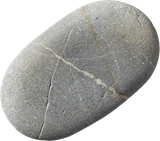
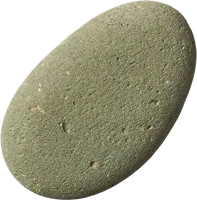
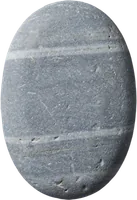
Knolling isn’t only about tools. Stones, leaves, and shells look great in a grid too - especially sorted by size or color.
Knolling photography of river pebbles of different sizes and shades, from dark gray to almost white. Top-down view, arranged in a precise grid at 90-degree angles, sorted by color as a gradient, evenly spaced, every stone fully visible. Light wooden surface, soft natural daylight.
Variations: autumn leaves from green to red, seashells from a beach walk, dried flowers.
Common problems
AI still makes typical mistakes:
- Objects overlap or touch. Add “no overlapping, clear gaps between objects”.
- The camera is at an angle. Repeat “directly above” or add “flat orthographic view”.
- Too many things. Name the objects you want, or add “minimal, only a few objects”.
- Strange extra items. List objects explicitly and add “nothing else on the surface”.
AI or hands?
A generated picture is fast, but you don’t arrange anything yourself. And the arranging is half the fun - finding the right spot, aligning, stepping back. If you want that part, try knolling stones in our app.